Gabriel Marcel
French Christian existentialist who rejected the label 'existentialist'.

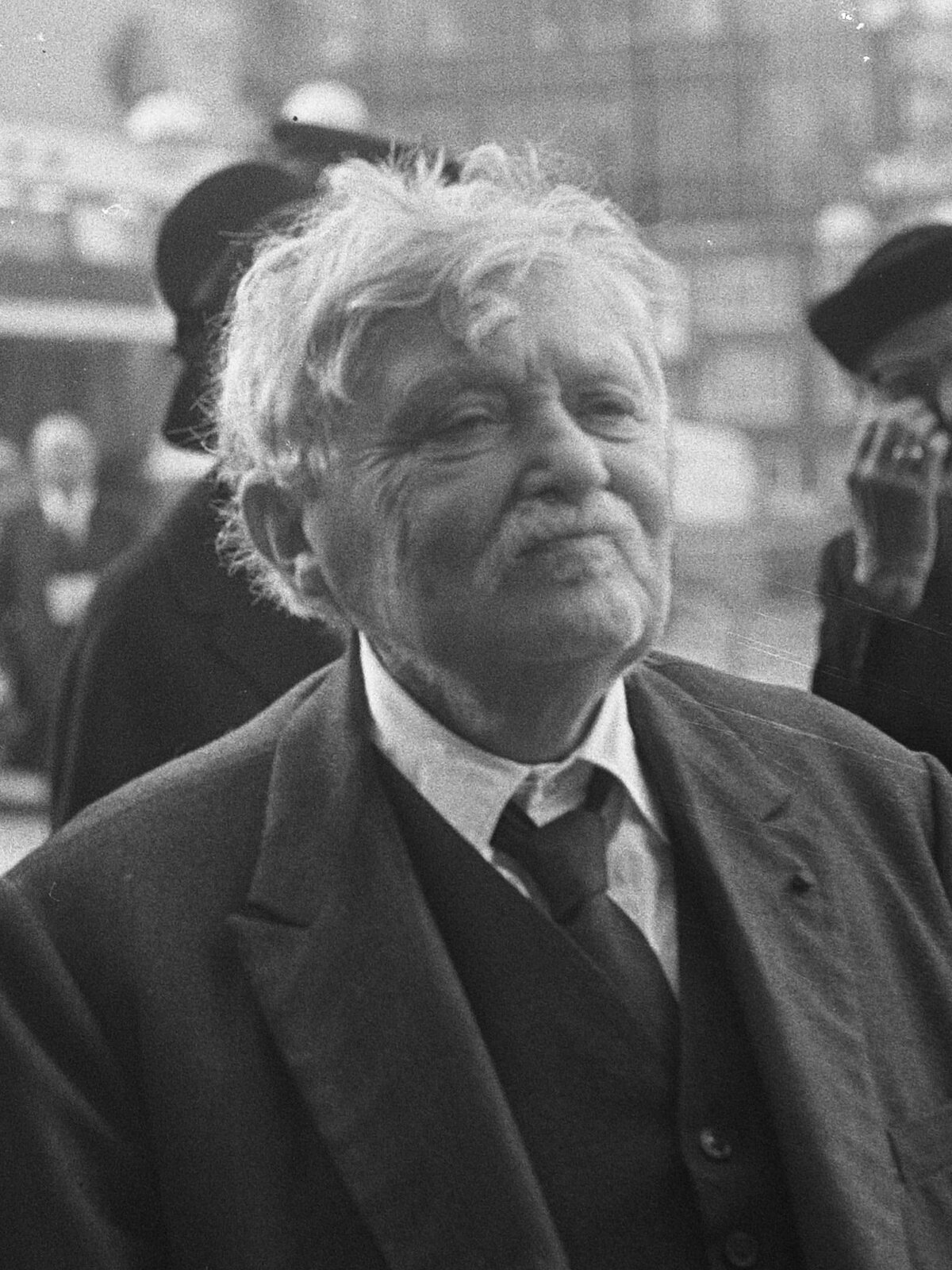
Eric Koch for Anefo · CC0
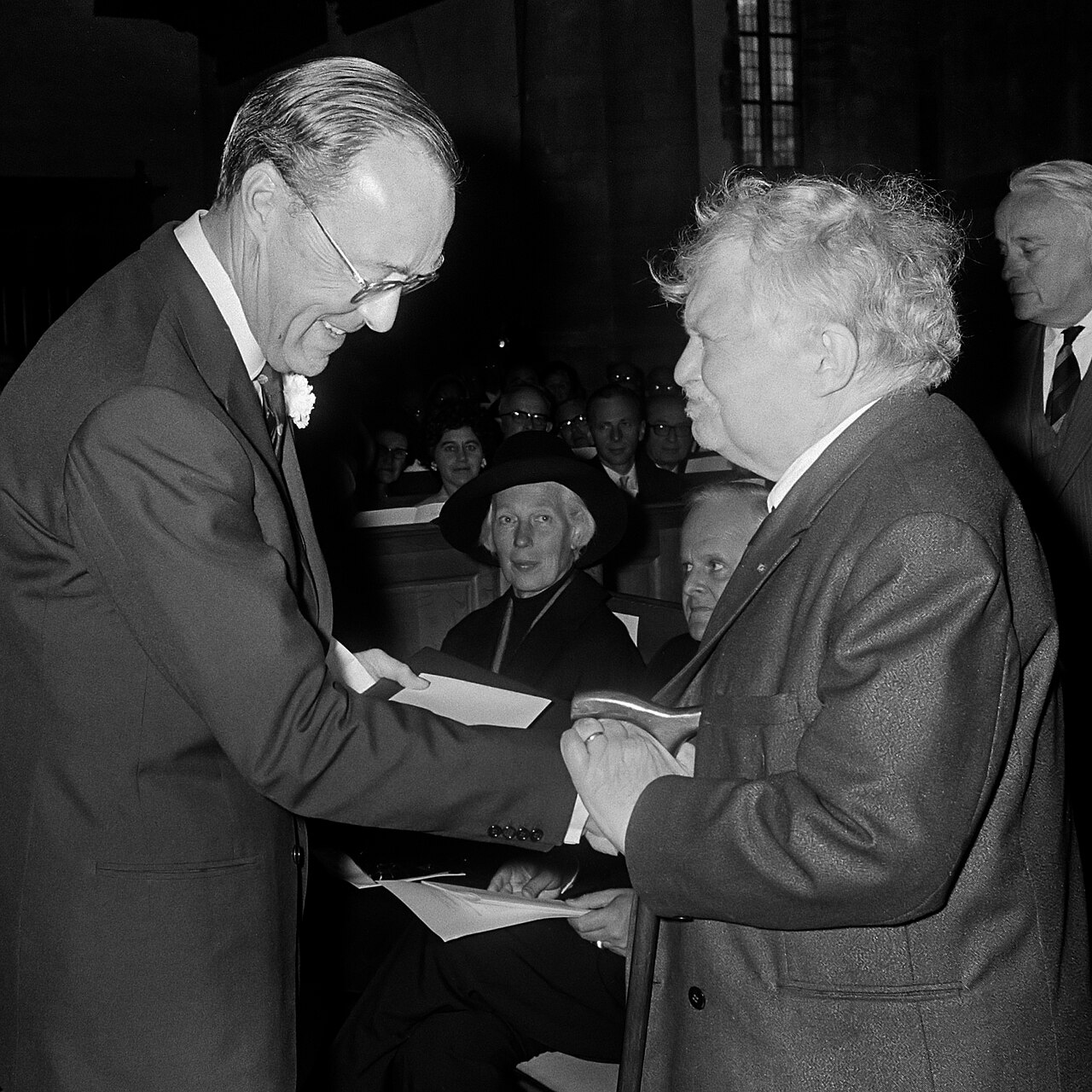
Gabriel Honoré Marcel was a French philosopher, playwright, music critic, and leading Christian existentialist. He is often regarded as the first French existentialist, though he dissociated himself from figures such as Jean-Paul Sartre, preferring the term 'philosophy of existence' or 'neo-Socrateanism' to define his own thought. His work focused on the modern individual's struggle in a technologically dehumanizing society, and he authored over a dozen books and at least thirty plays.
- born
- 7 December 1889, Paris, France
- died
- 8 October 1973, Paris, France
- field
- Philosophy, Playwriting, Music Criticism
- nationality
- French
- known_for
- Christian existentialism, philosophy of existence, neo-Socrateanism, The Mystery
Verified Timeline
Lore & Background
Gabriel Honoré Marcel was born on 7 December 1889 in Paris, France. His mother, Laure Meyer, who was Jewish, died when he was young, and he was brought up by his aunt and father, Henry Marcel. He completed his DES thesis and obtained the agrégation in philosophy from the Sorbonne in 1910 at the unusually young age of 20. During the First World War he worked as head of the Information Service, organized by the Red Cross to convey news of injured soldiers to their families. He taught in secondary schools, was a drama critic for various literary journals, and worked as an editor for Plon, the major French Catholic publisher. Marcel was the son of an agnostic and was himself not a member of any organized religion until his conversion to Catholicism in 1929. He died on 8 October 1973 in Paris.
Reader's Guide
Gabriel Marcel is significant as a leading Christian existentialist who shaped the development of existential thought in France, though he distanced himself from Jean-Paul Sartre. He argued that modern technology and materialism threaten human subjectivity, replacing the 'mystery' of being with technical 'problems' and 'solutions.' His concept of 'communion' asserted the possibility of perceiving another's subjectivity, contrasting with objectification, which he argued degrades individuals. Marcel's influence extended through his weekly philosophy discussion group, which included figures such as Jean Wahl, Paul Ricœur, Emmanuel Levinas, and Jean-Paul Sartre. He also influenced phenomenologist and Thomistic philosopher Karol Wojtyla (later Pope John Paul II), who drew on Marcel's distinction between 'being' and 'having' in his critique of technological change. Despite his philosophical reputation, Marcel was disappointed that his plays, which he wrote to appeal to a wider lay audience, were overshadowed by his treatises. His major books include the Metaphysical Journal (1927), Being and Having (1933), Homo Viator (1945), and Man Against Mass Society (1955). He gave the Gifford Lectures at the University of Aberdeen between 1949 and 1950, which were published as The Mystery of Being (1951). He also gave the William James Lectures at Harvard in 1961–1962, subsequently published as The Existential Background of Human Dignity.
Did You Know?
- Marcel completed his agrégation in philosophy from the Sorbonne in 1910 at the unusually young age of 20.
- During the First World War, he worked as head of the Information Service organized by the Red Cross to convey news of injured soldiers to their families.
- He was the son of an agnostic and did not join any organized religion until his conversion to Catholicism in 1929.
- Marcel wrote at least thirty plays, but was disappointed that his reputation was almost entirely based on his philosophical treatises.
- He gave the William James Lectures at Harvard in 1961–1962, later published as The Existential Background of Human Dignity.
Philosophical Identity and Self-Definition
Gabriel Marcel (1889–1973) occupied a peculiar position in the history of French thought. Though later scholars frequently labeled him the first French existentialist, he himself bristled at that categorization, particularly when it placed him alongside Jean-Paul Sartre. Instead, he favored the term "philosophy of existence" or "neo-Socrateanism" — a label that echoed Søren Kierkegaard, the Danish thinker often credited as the father of Christian existentialism. This self-positioning was no mere semantic preference; it reflected a deeper conviction that his thought was rooted in a Christian and Socratic tradition rather than in the atheistic currents that would later dominate existentialist discourse. Marcel's spiritual journey reinforced this distinction. Born to an agnostic father and raised after his Jewish mother's early death by his aunt and father, he remained outside any organized religion until his conversion to Catholicism in 1929. That conversion became a foundational pillar of his philosophical identity, shaping his insistence on mystery, communion, and the irreducible dignity of the person.
Communion, Objectification, and the Technological Threat
At the heart of Marcel's philosophy lay a fierce defense of human subjectivity against two interlocking threats: the reduction of persons to objects, and the annihilation of the individual within a technologically driven mass society. He argued that modern scientific thinking replaces the genuine "mystery" of existence with a sterile framework of technical problems and solutions, persuading the human subject to accept a diminished role as merely "he" within the internal dialogue of science. In his view, technology wields a privileged authority that convinces people to rejoice in their own annihilation as full persons. His dramatic work illustrated this danger vividly. In Le Palais de Sable (1913), the politician Roger Moirans treats both daughters not as subjects but as objects conforming to his own image, revealing what Marcel called a process that strips its object of the one thing of value and thereby degrades it. Against this, Marcel championed "communion" — a state in which two individuals genuinely perceive each other's subjectivity, standing in contrast to the mere objective characterization that dominates modern interaction.
A Remarkably Diverse Intellectual Career
Marcel's professional life defied easy categorization. He earned the agrégation in philosophy from the Sorbonne at the astonishingly young age of twenty in 1910, completing his DES thesis along the way. Yet his career stretched far beyond the academy. During the First World War, he served as head of the Red Cross Information Service, relaying news of wounded soldiers to their families. He taught in secondary schools, wrote drama criticism for literary journals, and worked as an editor at Plon, a major French Catholic publishing house. He was also a playwright of considerable output — at least thirty plays — and a music critic. His philosophical books, including the Metaphysical Journal (1927), Being and Having (1933), Homo Viator (1945), and Man Against Mass Society (1955), drew on this richly varied experience. He delivered the Gifford Lectures at Aberdeen in 1949–1950, published as The Mystery of Being, and the William James Lectures at Harvard in 1961–1962. Despite this breadth, Marcel was puzzled and disappointed that his reputation rested almost entirely on his philosophical treatises rather than on the plays he had written to reach a wider lay audience.
Mentorship and Lasting Influence
Perhaps Marcel's most enduring legacy was his role as an informal mentor to an extraordinary generation of French thinkers. For many years he hosted a weekly philosophy discussion group, and through those gatherings he met and shaped the intellectual development of Jean Wahl, Paul Ricœur, Emmanuel Levinas, and even Jean-Paul Sartre — figures whose later work would dominate the philosophical landscape. His influence also crossed borders and disciplines. The phenomenologist and Thomistic philosopher Karol Wojtyla, who would become Pope John Paul II, drew directly on Marcel's distinction between "being" and "having" in his own critique of technological change. Marcel's ideas found their way into English-language scholarship through a steady stream of translations beginning in 1948, including works rendered by translators such as Katherine Farrer, G. S. Fraser, and Emma Craufurd, ensuring that his thought reached readers well beyond the French-speaking world. His death in Paris on 8 October 1973 closed a life in which philosophy, drama, music criticism, and spiritual inquiry remained inseparable threads.
Gallery
Frequently Asked Questions
Who is Gabriel Marcel?
Gabriel Marcel (1889–1973) was a French thinker who worked across philosophy, drama, and music criticism. He is widely recognized as the first major French voice in Christian existentialism, though he himself preferred different labels for his thought.
What is Gabriel Marcel's core philosophical idea?
His central concern was the modern person's struggle to remain authentic and connected in a society he saw as increasingly dehumanized by technology. He framed this through what he called a 'philosophy of existence' or 'neo-Socrateanism,' emphasizing lived experience over abstract systems.
Why did Gabriel Marcel reject the label 'existentialist'?
He deliberately distanced himself from the Sartrean existentialist movement and its atheistic assumptions. Instead, he insisted on terms like 'philosophy of existence' to preserve the Christian and relational dimensions of his thinking.
What are Gabriel Marcel's most notable works?
His magnum opus is the multi-volume *The Mystery of Being*, but he also wrote more than a dozen other books and at least thirty stage plays. His dramatic output is a major part of his legacy alongside his philosophical treatises.
What fields did Gabriel Marcel work in besides philosophy?
He was an active playwright and a published music critic throughout his career. These creative and critical roles informed his philosophical emphasis on concrete human experience rather than purely theoretical abstraction.
More in Philosophers 1-24
Elsewhere in the Philosophers universe
Spotted an error? Know more?
This is a living reference — every entry is fact-audited, and reader corrections feed straight into our audit queue. Suggest an edit · See this site's audit record