
Frank P. Ramsey
British philosopher, mathematician, and economist who died at 26.

ELApro · CC BY-SA 4.0
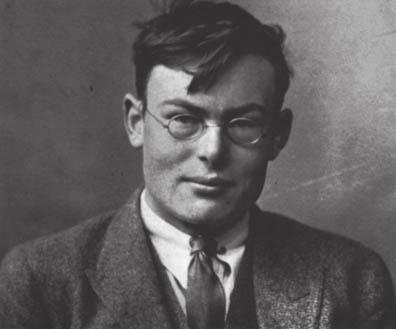
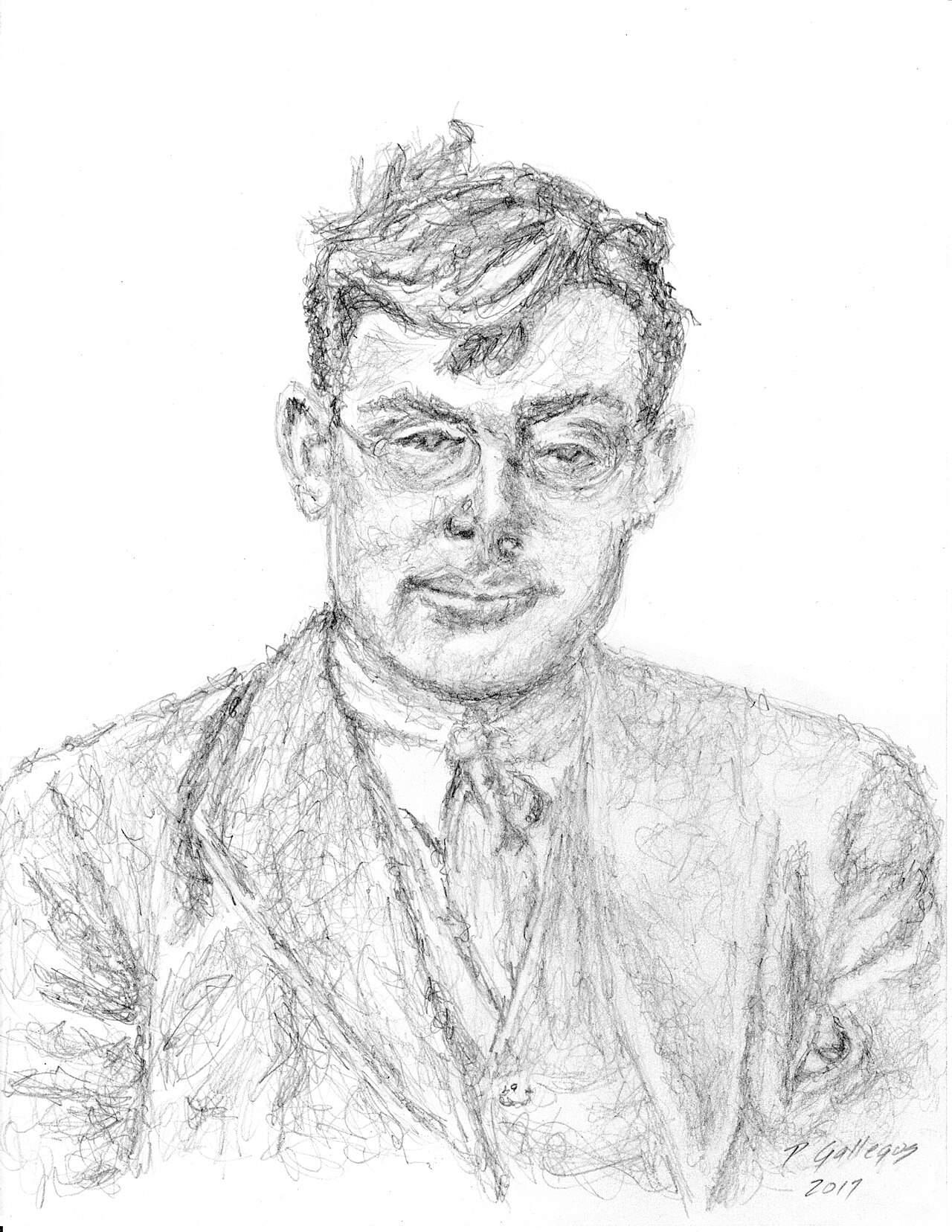
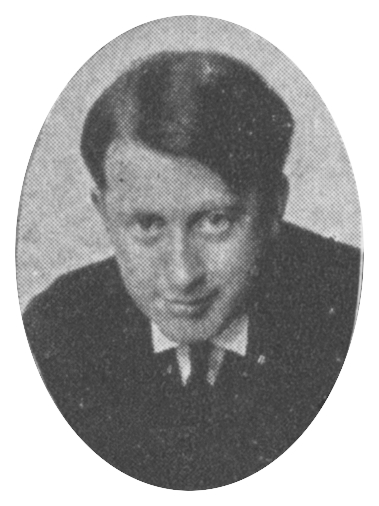
Frank Plumpton Ramsey was a British philosopher, mathematician, and economist who made major contributions to all three fields before his death at the age of 26. He was a close friend of Ludwig Wittgenstein and, as an undergraduate, translated Wittgenstein's Tractatus Logico-Philosophicus into English. He was also influential in persuading Wittgenstein to return to philosophy and Cambridge. Like Wittgenstein, he was a member of the Cambridge Apostles, the secret intellectual society, from 1921.
- known_for
- Ramsey's theorem, translation of Wittgenstein's Tractatus, contributions to deci
Verified Timeline
Lore & Background
Ramsey was born on 22 February 1903 in Cambridge, where his father Arthur Stanley Ramsey was President of Magdalene College. He entered Winchester College in 1915 and later studied mathematics at Trinity College, Cambridge. There he became a student of John Maynard Keynes and an active member in the Apostles. In 1923, he received his bachelor's degree in mathematics, passing with first class with distinction and was named Senior Wrangler (top of his class). Easy-going, simple and modest, Ramsey had many interests; his brother attested he was 'interested in almost everything' and had 'a sort of left-wing caring-for-the-underdog kind of outlook about politics'. In 1923, he was befriended by Geoffrey and Margaret Pyke, and recorded in his diary a proposition to Margaret: 'Margaret will you fuck with me?' This contributed to depressive moods, and he travelled to Vienna for psychoanalysis with Theodor Reik. While in Vienna, he visited Wittgenstein at Puchberg. He married Lettice Baker in August 1925 in a Register Office, since Ramsey was a 'militant atheist'. The marriage produced two daughters. In 1926 he became a university lecturer in mathematics and later a Director of Studies in Mathematics at King's College. Suffering chronic liver problems, Ramsey developed jaundice after an abdominal operation and died on 19 January 1930 at Guy's Hospital in London at the age of 26. There is a suspicion that the cause might be an undiagnosed leptospirosis with which he could have become infected while swimming in the Cam. He is buried in the Parish of the Ascension Burial Ground in Cambridge.
Reader's Guide
Ramsey's significance lies in his contributions across philosophy, mathematics, and economics, all before his death at 26. In mathematical logic, his 1928 paper proved Ramsey's theorem, a minor lemma that became a foundational result in combinatorics, leading to the entire branch of Ramsey theory. He also solved a special case of the decision problem for first-order logic, now called the Bernays–Schönfinkel–Ramsey class. In philosophy, his translation of Wittgenstein's Tractatus and his critical conversations with Wittgenstein helped Wittgenstein realize 'grave mistakes' in that work, as acknowledged in Philosophical Investigations. Ramsey was also listed in the bibliography of the Vienna Circle manifesto (1929) as a closely related author. His legacy includes his influence on Wittgenstein's return to philosophy and his work in economics, though the source does not detail his economic contributions. His notes and manuscripts are held at the University of Pittsburgh and King's College, Cambridge.
Did You Know?
- Ramsey mastered German 'in almost hardly over a week' according to I. A. Richards, enabling him to translate Wittgenstein's Tractatus at age 19.
- He was named Senior Wrangler (top of his class) in the Mathematical Tripos of 1923.
- Ramsey's analyst in Vienna was Theodor Reik, a disciple of Freud.
- He proposed to Margaret Pyke with the direct question 'Margaret will you fuck with me?' as recorded in his diary.
- There is a suspicion that Ramsey's death at 26 was caused by undiagnosed leptospirosis from swimming in the Cam.
Gallery

Frequently Asked Questions
Who is Frank P. Ramsey?
Frank Plumpton Ramsey was a British thinker who produced significant work across philosophy, mathematics, and economics. He is remembered as one of the most prodigiously gifted young minds of the early twentieth century.
What is Frank P. Ramsey's most famous contribution?
He is best known for Ramsey's theorem in combinatorics, which demonstrates that sufficiently large structures inevitably contain order. The result became a foundational pillar of combinatorial mathematics.
What was Frank P. Ramsey's connection to Wittgenstein?
As an undergraduate, Ramsey helped C. K. Ogden render Wittgenstein's Tractatus Logico-Philosophicus into English. He was also a close personal friend of Wittgenstein and played a key role in convincing him to return to philosophy and to Cambridge.
How did Frank P. Ramsey's life end?
Ramsey died in 1930 at just 26 years old, cutting short what many expected to be a long and influential career. His early death made his already substantial body of work all the more remarkable to his peers.
What did Frank P. Ramsey contribute to mathematical logic?
He made important contributions to the decision problem for first-order logic, addressing whether a general algorithm could determine the validity of logical formulas. His work in this area helped shape the direction of mathematical logic in the 1920s.
More in Philosophers 1-24
Elsewhere in the Philosophers universe
Spotted an error? Know more?
This is a living reference — every entry is fact-audited, and reader corrections feed straight into our audit queue. Suggest an edit · See this site's audit record