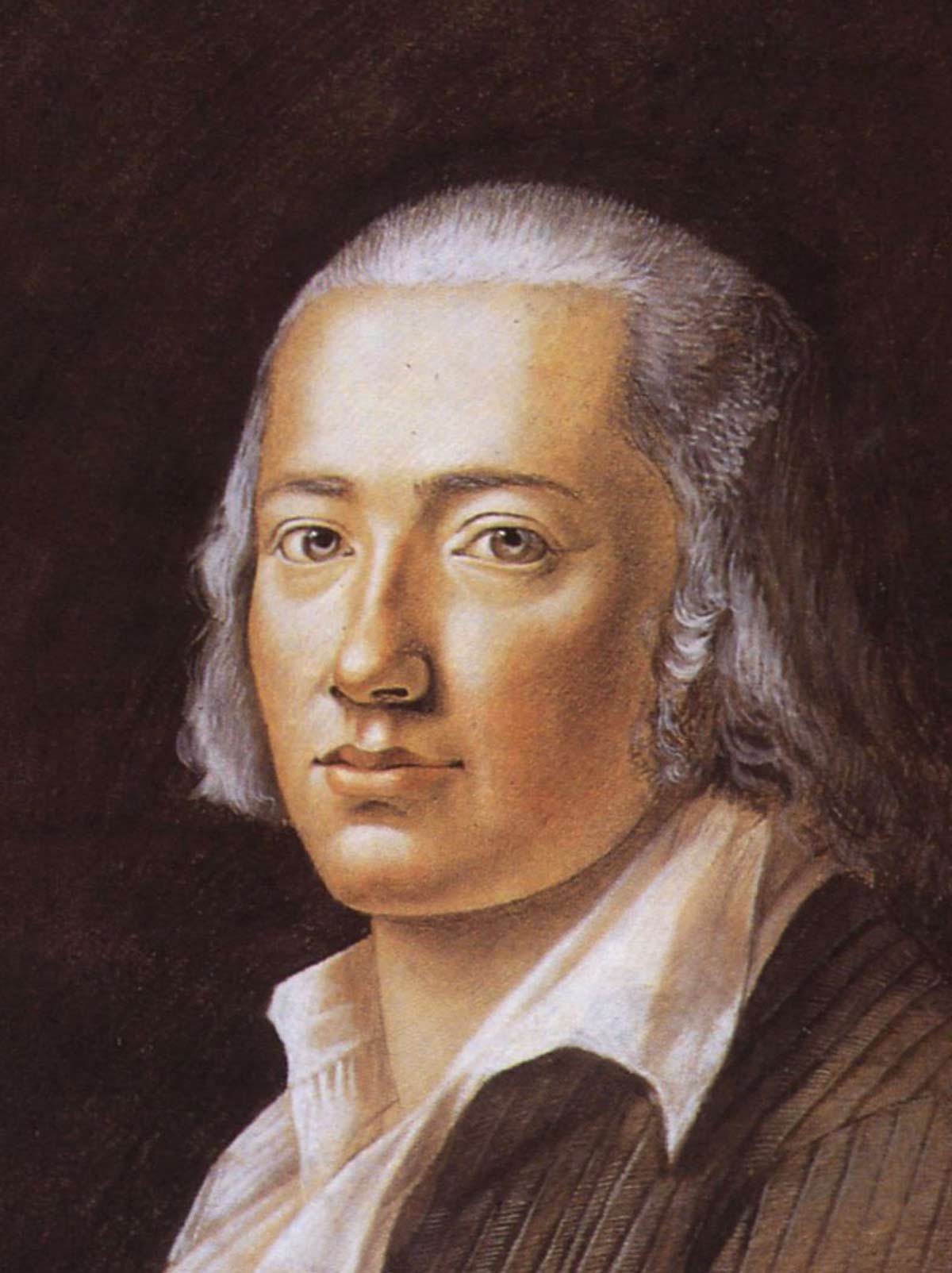
Friedrich Hölderlin
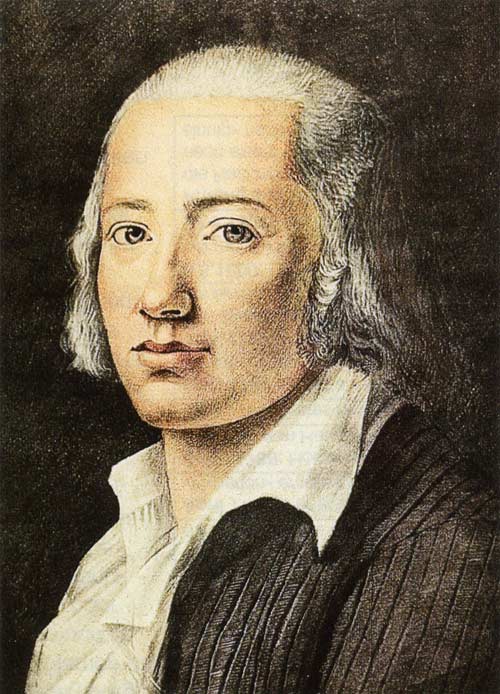
German poet and philosopher of German Romanticism and Idealism.

Johannes Baier · CC BY 4.0
Johann Christian Friedrich Hölderlin was a German poet and philosopher, described by Norbert von Hellingrath as "the most German of Germans." He was a key figure of German Romanticism and an important thinker in the development of German Idealism, particularly due to his early association with and philosophical influence on Georg Wilhelm Friedrich Hegel and Friedrich Wilhelm Joseph Schelling.
- born
- 20 March 1770
- died
- 7 June 1843
- field
- Poetry, Philosophy
- nationality
- German
- known_for
- Key figure of German Romanticism; influence on German Idealism; melding Christia
Lore & Background
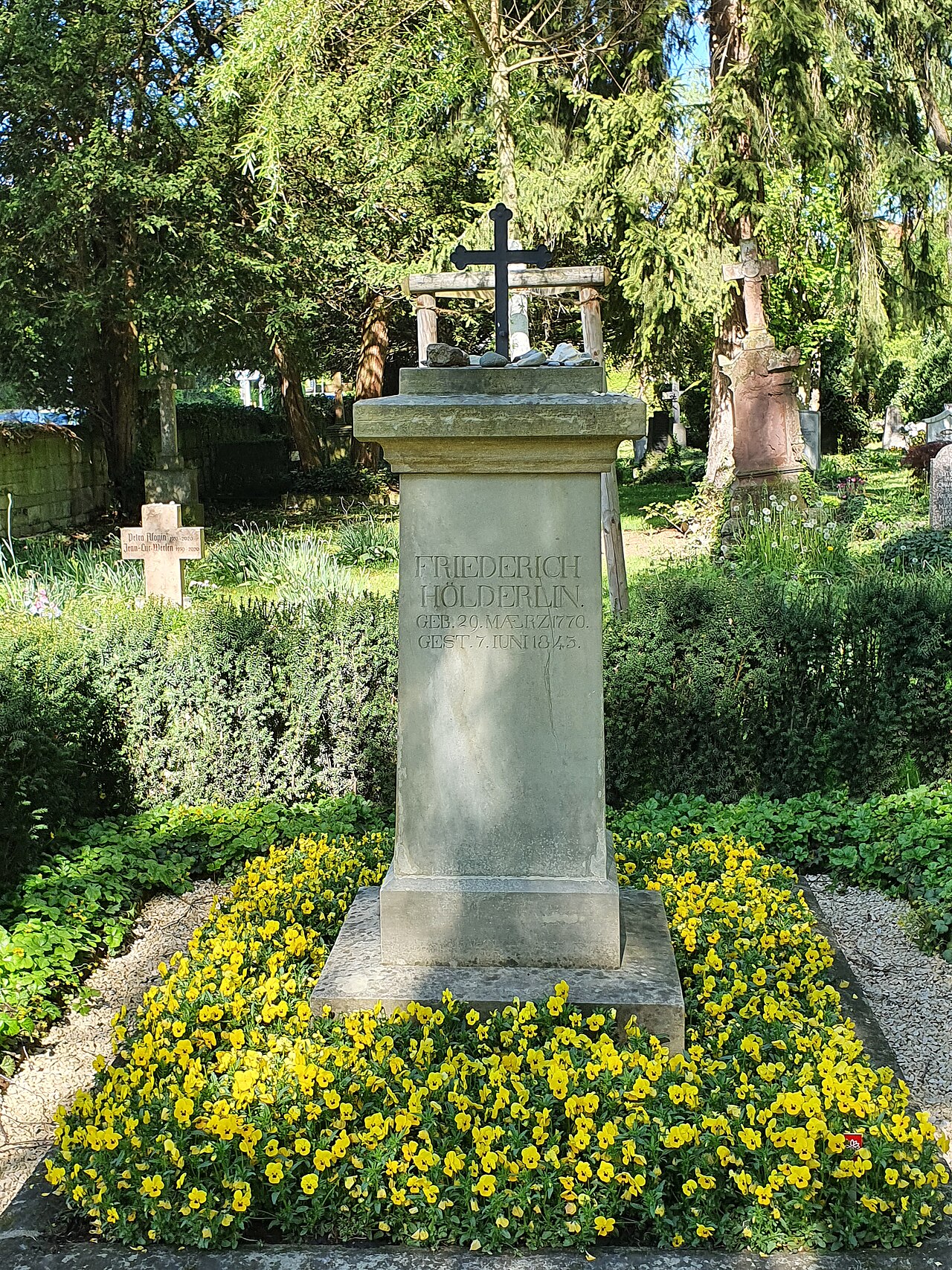
Hölderlin was born on 20 March 1770 in Lauffen am Neckar, then part of the Duchy of Württemberg. His childhood was marked by bereavement: his father, Heinrich Friedrich Hölderlin, died when he was two, and his stepfather, Johann Christoph Gok, died in 1779 when Hölderlin was nine. His mother intended him for the Lutheran ministry, and he attended the Tübinger Stift, where he was friends with Hegel and Schelling. He graduated in 1793 but could not devote himself to the Lutheran faith, instead becoming a tutor. Two years later, he briefly attended the University of Jena, where he interacted with Johann Gottlieb Fichte and Novalis, before resuming his career as a tutor. He struggled to establish himself as a poet and was plagued by mental illness. In 1806 he was sent to a clinic in Tübingen run by Dr. Johann Heinrich Ferdinand von Autenrieth, deemed incurable, and instead given lodging by a carpenter, Ernst Zimmer. He spent the final 36 years of his life in Zimmer's residence, dying on 7 June 1843 at age 73. Hölderlin followed the tradition of Johann Wolfgang von Goethe and Friedrich Schiller as an admirer of Greek mythology and Ancient Greek poets such as Pindar and Sophocles, and melded Christian and Hellenic themes in his works. His most important relationship was with Susette Gontard, the wife of his employer, banker Jakob Gontard, which ended when their affair was discovered. He produced three unfinished versions of a tragedy in the Greek manner, The Death of Empedocles, and composed odes in the vein of the Ancient Greeks Alcaeus and Asclepiades of Samos. His stay in Bordeaux is celebrated in the poem 'Andenken' ('Remembrance').
Reader's Guide
Hölderlin's significance lies in his dual role as a poet and philosopher at the heart of German Romanticism and German Idealism. His early friendship with Hegel and Schelling at the Tübinger Stift positioned him as an influence on their philosophical development; it has been speculated that he introduced Hegel to Heraclitus's ideas on the unity of opposites, which later informed Hegel's concept of dialectics. Martin Heidegger, upon whom Hölderlin had a great influence, said: 'Hölderlin is one of our greatest, that is, most impending thinkers because he is our greatest poet.' Hölderlin's legacy includes his blending of Christian and Hellenic themes, his admiration for Greek poets like Pindar and Sophocles, and his commitment to the principles of the French Revolution, which influenced works such as Hyperion and The Death of Empedocles. Despite struggling with mental illness and living in obscurity for his final 36 years, his work was later recognized as foundational to German literature and philosophy.
Did You Know?
- Hölderlin's father died when he was two years old, and his stepfather died when he was nine.
- He was friends with Hegel and Schelling at the Tübinger Stift, and it has been speculated that he introduced Hegel to Heraclitus's ideas on the unity of opposites.
- For over a century, a rumor claimed Hölderlin fathered an illegitimate child, but a 2020 archival discovery proved the child was fathered by Major Heinrich von Kalb, exonerating Hölderlin.
- He spent the final 36 years of his life in the residence of a carpenter, Ernst Zimmer, after being deemed incurable.
- His stay in Bordeaux is celebrated in the poem 'Andenken' ('Remembrance').
Gallery
Frequently Asked Questions
Who is Friedrich Hölderlin?
He was a German poet and philosopher (1770–1843) who became a defining voice of German Romanticism. The poet Stefan George famously called him 'the most German of Germans.'
What was Hölderlin's role in German Idealism?
In his early years he was a close intellectual companion of both Hegel and Schelling, and his philosophical ideas helped lay groundwork for the German Idealist tradition. His thinking bridged Romantic sensibility and systematic philosophy.
What made Hölderlin's work distinctive?
His poetry and philosophical writing are recognized for fusing Christian religious themes with classical Greek mythology into a single vision. This unique synthesis set him apart from many of his Romantic contemporaries.
When and where did Hölderlin live?
He was born on 20 March 1770 and died on 7 June 1843, spending his entire life in Germany. His creative output spans both poetry and philosophy as a unified project.
Why does Hölderlin still matter to philosophy fans?
He represents a rare case where a poet's thinking directly shaped major philosophical systems, particularly through his early engagement with Hegel and Schelling. His legacy endures as a bridge between Romantic literature and German Idealist thought.
More in Philosophers 1-24
Related in Philosophers
Links follow this subject's own source article.
Elsewhere in the Philosophers universe
Spotted an error? Know more?
This is a living reference — every entry is fact-audited, and reader corrections feed straight into our audit queue. Suggest an edit · See this site's audit record